
Reviewed · TRANSYLVANIA DAY TRIPS
11-Day Romania Tour from Bucharest with Transylvania & Bucovina
Romania reveals its best surprises beyond Bucharest: a painted monastery with famous blue frescoes, a steam train that climbs a forested mountain valley, and medieval towns where German Saxon buildings still frame the squares. This private 11-day route covers a remarkable amount of ground without making you organize each transfer.
I like the private vehicle and guide, which give you room to ask questions and adjust the pace. I also like the mix of grand sights and local traditions, from Peles Castle and the Palace of Parliament to black pottery, painted eggs, and Maramures churches.
The main drawback is the mileage. You spend long stretches on the road, and some visits last only 30 to 40 minutes. At $2,367.30 per person, the tour offers strong convenience, but you should also budget for entrance fees, lunches, dinners, and souvenirs.
In This Review
- Key points to know before booking
- Why this route works for seeing Romania
- Bucharest begins with power, villages, and old streets
- Sinaia and Brasov bring the Carpathians into view
- Bran and Rasnov separate legend from history
- Biertan and Sighisoara show Saxon Transylvania
- Bicaz Gorge leads into Bucovina
- Bucovina’s painted monasteries reward close attention
- Maramures keeps old village traditions visible
- The Mocanita train and Merry Cemetery add character
- Cluj and Sibiu close the Transylvanian loop
- Curtea de Arges brings the journey south
- What the $2,367.30 price really covers
- Guide quality and the private format
- Who should book this Romania tour
- Should you book it?
- FAQ
- Is this a private tour?
- Does the tour include airport transfers?
- Are hotel pickup and drop-off included?
- Are meals included?
- Are attraction tickets included?
- Can the hotels change?
- What is the cancellation policy?
Key points to know before booking
- Romania’s far-flung regions in one trip: The route links Bucharest, Transylvania, Bucovina, Maramures, and Wallachia.
- Private touring from start to finish: Only your group participates, with an English-speaking licensed guide and driver.
- Ten nights and airport transfers included: Hotel pickup, drop-off, breakfast, and round-trip airport transport simplify the practical side.
- Major highlights plus living traditions: Castles and UNESCO sites share the schedule with village pottery, painted eggs, and rural churches.
- A serious driving itinerary: The distance covered is impressive, but several days involve extended road travel and brief stops.
- Guides can shape the experience: Past guides named Christian, Gabriel, and Gabriel Florea were praised for thoughtful planning, personal attention, and clear insight into Romanian history.
Why this route works for seeing Romania
This is not a slow holiday in one region. It is a grand circuit through much of Romania, beginning in Bucharest and moving north through the Carpathians, Transylvania, Bucovina, and Maramures before returning south.
That wide reach is the tour’s greatest strength. You get the famous Dracula connection, but you also see the Romania behind the marketing: Orthodox monasteries, Saxon towns, mountain roads, village crafts, and wooden churches built with old local methods.
The private format matters here. With a dedicated car or van, you avoid the challenge of connecting remote monasteries and villages by public transport. Your guide can provide context along the way and help you use short stops well.
The tradeoff is simple: this is a sightseeing circuit, not a restful retreat. Expect a full day of touring, frequent hotel changes, and plenty of time on winding roads. If you prefer to linger for several days in each town, this schedule may feel rushed. If you want a broad first look at Romania, it is a practical choice.
More Transylvania day trips:
- Transylvania and Dracula Castle Full Day Tour from Bucharest
★ 4.5 · 1,589 reviews - Castles of Transylvania: Private Day Trip from Bucharest
★ 4.5 · 248 reviews - 2-Day Medieval Transylvania with Brasov,Sibiu and Sighisoara Tour from Bucharest
★ 4.5 · 145 reviews
Bucharest begins with power, villages, and old streets
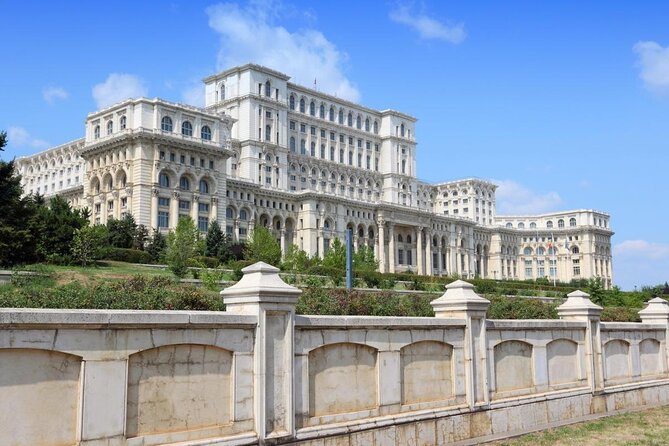
The opening day sets up three very different sides of Romania’s capital.
The Palace of Parliament is the big visual shock. Built under Communist leader Nicolae Ceausescu, it is the world’s second-largest administrative building after the Pentagon. Inside, you can expect marble, oak paneling, crystal chandeliers, gold leaf, stained glass, mosaics, and heavy carpets.
The building is impressive, but it also raises difficult questions about the cost of Ceausescu’s rule and the city that was altered to make room for it. The planned grandeur is part of the lesson. Allow about 90 minutes, and remember that the admission ticket is not included.
The Dimitrie Gusti National Village Museum offers a gentler contrast. Set beside Lake Herastrau, this open-air museum covers about 30 acres and contains around 50 traditional buildings from across Romania. You see homes and rural structures that explain how local building styles changed from one region to another.
I like this pairing because the two attractions tell opposite stories. One shows state power and excess. The other shows ordinary homes, crafts, and village life. The day ends with a walking tour through Lipscani, Bucharest’s historic center, where old streets, restaurants, shops, and newer redevelopment meet.
Sinaia and Brasov bring the Carpathians into view
Day two heads north toward the mountain resort of Sinaia. The short stop at Sinaia Monastery introduces Romanian Orthodox architecture and the religious traditions that appear again and again later in the trip.
Peles Castle is the day’s grand centerpiece. Set against the Carpathian Mountains, it was built in the German Renaissance style and is often counted among Europe’s most beautiful castles. The interior visit lasts about 90 minutes, although the ticket is extra.
Peles is more polished and decorative than the defensive castles later in the tour. That difference helps you understand the country’s changing rulers and social order without needing a lecture. One is a royal residence built for display. The other sites were built to survive attack.
In Brasov, a two-hour walking tour covers the historic center. Look for the Black Church, Council Square, Ecaterina’s Gate, the White Tower, and the Black Tower. The city’s Gothic, Baroque, and Renaissance buildings sit beneath the Southern Carpathian peaks, giving the afternoon a strong sense of place.
The schedule gives you a useful introduction, but not much free time. If you want museums, cafés, or a longer walk beyond the main sights, you may need to use personal time outside the planned visits.
Bran and Rasnov separate legend from history
Bran Castle is marketed as Dracula’s Castle, and the nickname certainly draws attention. The actual building is a medieval fortress dating from the 14th century, while the Dracula connection comes from Bram Stoker’s fictional character and the real Vlad Tepes, or Vlad the Impaler.
Vlad was a Wallachian ruler remembered in Romania for resisting the Ottoman Empire. His reputation for harsh punishment helped create the dark legend associated with his name. Bran Castle is not simply a horror attraction, though. Its medieval rooms, hilltop setting, and long connection with royal Romania make it worth seeing even if you are not interested in Dracula.
Plan for about two hours, with admission extra. Crowds can affect the experience, but the private format gives your group more control over timing than a large coach tour.
Rasnov Citadel adds the practical military side of medieval Transylvania. Built to protect the town and nearby villages from invasion, the fortress gave local people a place to take shelter, including their livestock. The panoramic view is the main reward, and the visit lasts about an hour.
A few more Bucharest tours worth a look
- Bucharest: Dracula’s Castle, Peles Castle, & Brasov Old Town
★ 4.5 · 17,858 reviews - Bucharest: Dracula Castle, Peles Castle & Brasov Old Town
★ 4.6 · 10,891 reviews - Bucharest: Dracula’s Castle, Peleș Castle & Brașov Day Trip
★ 4.5 · 5,919 reviews - Bucharest: Palace of Parliament Tickets and Guide
★ 4.3 · 3,182 reviews
Biertan and Sighisoara show Saxon Transylvania
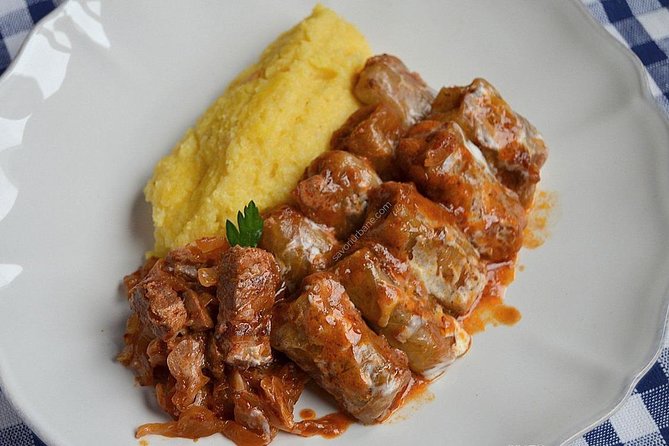
Day four shifts from famous names to some of the most atmospheric historic places in the country.
Biertan’s fortified church is part of the UNESCO World Heritage listing for the fortified villages of Transylvania. The church complex preserves much of its original form from the late 15th and early 16th centuries. Its walls, defensive design, and village setting explain how German Saxon communities protected themselves while maintaining religious and civic life.
Do not hurry through the village after seeing the church. The route specifically allows time to stroll around, and that walk is important. Biertan is best understood as a whole setting rather than only a single building.
Sighisoara gets two hours and offers more to explore. Its medieval center was founded by German craftsmen and merchants and remains one of Romania’s best-preserved fortified towns. The Clock Tower and History Museum, Church on the Hill, House of Dracula, Central Square, and covered school stairway all fit into the visit.
The historic center is compact, but the hill and stairway require comfortable shoes. Admission to individual attractions is not included, even though the walking tour itself is free.
Bicaz Gorge leads into Bucovina
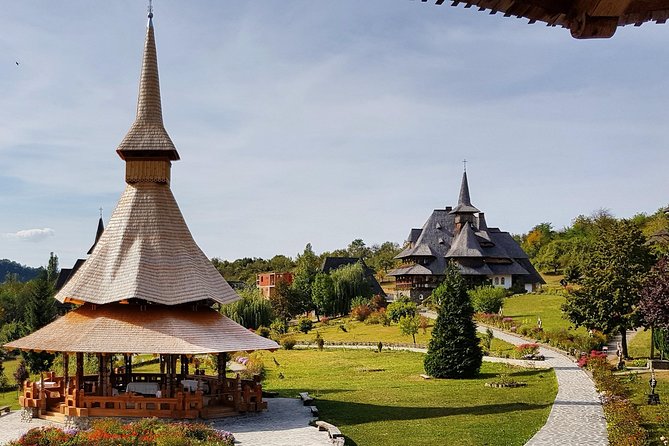
Day five is one of the most scenic transfers. The road through Bicaz Gorge cuts between sheer limestone cliffs that rise roughly 1,000 feet. The official photo stop lasts only about 15 minutes, so you should be ready when the vehicle pulls over.
Red Lake gives you a longer break. This natural mountain lake formed behind a natural dam, and reddish mineral deposits give it its name. Tree stumps rise from the water, creating an unusual and slightly eerie view.
You have about an hour here, including lunch at a small restaurant overlooking the lake. Food is not included, so this is a good place to plan for a paid meal rather than treating the stop as a quick roadside pause.
The road day is long, but the scenery gives it purpose. You are crossing from Transylvania into Bucovina, where the focus changes from fortified towns and castles to Orthodox art and rural traditions.
Bucovina’s painted monasteries reward close attention
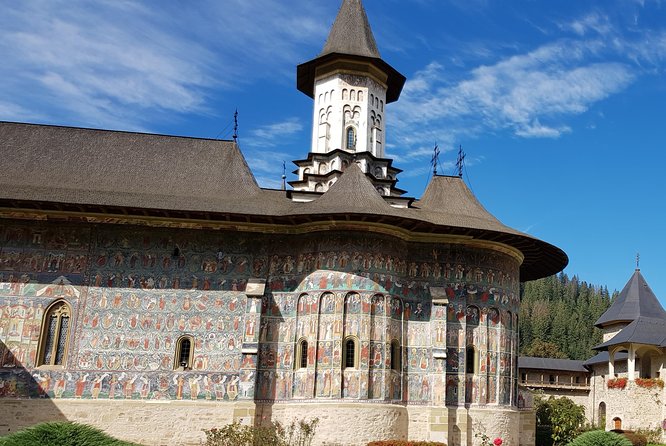
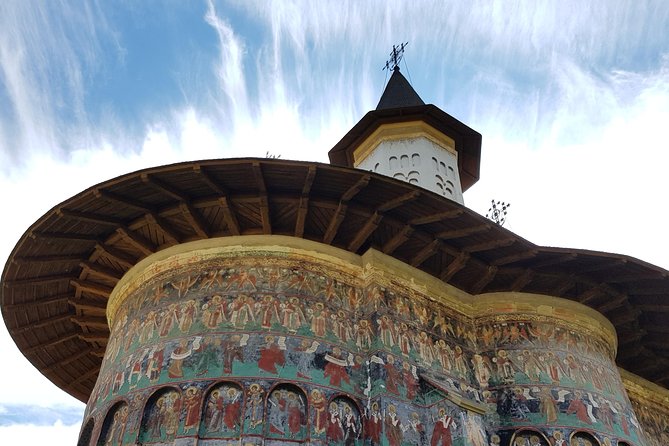
Voronet Monastery is the first major painted monastery on the route and one of Romania’s signature sights. Its exterior frescoes show saints, prophets, angels, demons, and scenes of heaven and hell. The famous blue used at Voronet has remained remarkably strong over the centuries.
The Last Judgment fresco on the exterior wall is the detail to study. At first, the images may seem crowded. Give yourself time to notice the order of the scenes and the expressive faces. The visit lasts about 40 minutes, and admission is extra.
The next day brings three more painted monasteries: Humor, Sucevita, and Moldovita. Each visit is planned for about 30 minutes. That is enough to see the main church and understand the basic design, but it is not a long study visit.
You will get more from these stops if you listen closely to your guide’s explanation of the painted scenes and local religious traditions. The paintings were not simply decoration. They helped communicate biblical stories to communities in which many people could not read.
Marginea adds a hands-on cultural stop. The village is known for black pottery, a craft tradition said to date back to about 1500. You can watch the local style of pottery and buy a piece as a useful souvenir.
The Painted Eggs Museum near the monasteries brings another Bucovina craft into view. Letitia Orsivschi’s collection contains more than 3,000 decorated eggs, including eggs from birds and reptiles as varied as emu, ostrich, crocodile, flamingo, and quail. Letitia explains the symbols used in Bucovina designs, making this more than a quick display of curiosities.
Maramures keeps old village traditions visible
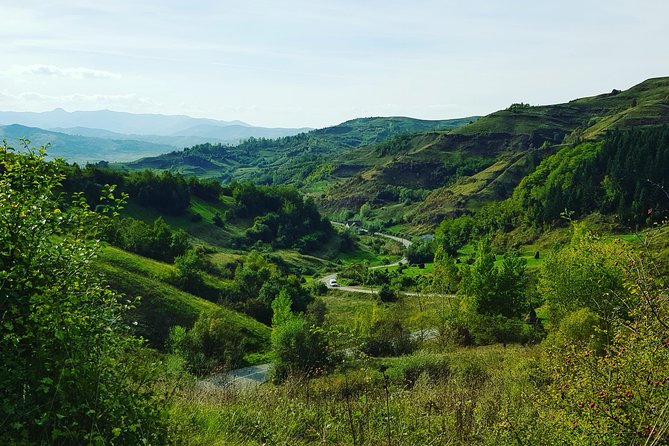
The route then heads toward Maramures, a region of small villages, meadows, pastures, and wooden gates. The appeal is not a single grand attraction. It is the chance to see a rural way of life that has preserved older customs and building styles.
The wooden churches are the focus. Barsana Monastery has a striking two-level wooden church and offers a look at monastic life in one of Romania’s most traditional areas.
Rozavlea and Ieud add UNESCO-listed wooden churches. Ieud Deal is described as the oldest of the group, dating to the 14th century. These buildings are more intimate than the large stone churches in major cities, with careful woodwork and a strong connection to the villages around them.
You should expect simple settings rather than polished museum displays. That is part of their value. Your guide’s explanation will help you understand why the churches mattered to local communities and how the buildings survived.
The Mocanita train and Merry Cemetery add character
Day eight includes one of the trip’s most unusual experiences: the Mocanita steam train from Viseu de Sus. The narrow-gauge railway runs for about 30 miles through a mountain valley, and the old steam engine still takes on water and firewood along the way.
The ride lasts about three hours. It is not a luxury rail journey. The attraction is the old locomotive, the slow pace, and the sense of traveling into a remote valley where the railway remains a practical link to settlements higher up.
Train admission is extra, so confirm the current arrangements when booking. The schedule also depends on the operating train service, making this one part of the trip where timing matters.
At Sapanta’s Merry Cemetery, blue wooden crosses show carved scenes and humorous verses about the people buried there. The approach to death is direct, personal, and often playful. You do not need to read every inscription to appreciate the carved work, but a guide can explain the local meaning.
Sapanta Peri Monastery has another major wooden structure, described as the tallest wooden church in the world. The monastery sits beside the village in a dendrology park and is home to eight nuns. Together, the cemetery and monastery show two very different ways Maramures treats memory and faith.
Cluj and Sibiu close the Transylvanian loop
Cluj-Napoca gives you a short city tour through one of Transylvania’s main urban centers. Union Square is dominated by St. Michael’s Church, a fine Gothic building from the 15th century. The route also includes the Opera House, historic center, Orthodox Cathedral, and the surrounding 18th and 19th-century buildings.
The visit lasts about 90 minutes, so think of Cluj as an introduction rather than a full city stay. You see the central sights before continuing to Sibiu.
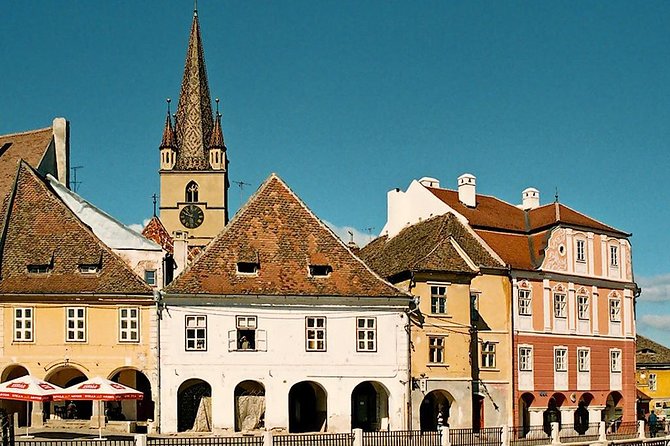
Sibiu gets another 90-minute walking tour. Its Old Town has large squares, steep-roofed buildings, remnants of medieval walls, and a distinctly Germanic character. Look for the Bridge of Lies, the Evangelical Church, the Stairs Passage, the Great Square, and the Little Square.
The Brukenthal Museum and cathedral are also listed among the highlights, though individual admission is not included. Sibiu is a good place to notice the differences between Transylvanian cities. Brasov feels framed by mountains, Sighisoara feels like a preserved medieval citadel, and Sibiu feels shaped by guilds, trade, and broad civic squares.
Curtea de Arges brings the journey south
The final sightseeing day visits Curtea de Arges, a former capital of Wallachia on the Arges River. The walking tour includes the Princely Church and Old Court ruins, the Episcopal Church, and Olari Church.
This stop gives the itinerary a useful historical counterpoint. Much of the trip has focused on Transylvania and northern Romania, while Curtea de Arges reconnects you with Wallachia and the southern Carpathian region.
The tour ends with a transfer from your hotel to Bucharest Airport on day 11. Round-trip airport transfers are included, with the final transfer listed at about 30 minutes.
What the $2,367.30 price really covers
At $2,367.30 per person, the price is easiest to judge as a private touring package rather than as a simple hotel-and-transport deal.
Included are:
- Ten nights of accommodation
- Ten breakfasts
- Comfortable air-conditioned car or van
- English-speaking licensed guide and driver
- Airport pickup and return transfer
- Assistance throughout the trip
- Private touring for your group only
You still pay for attraction tickets, food and drinks, and souvenirs. That matters because many of the route’s headline sights, including the Palace of Parliament, Peles Castle, Bran Castle, the painted monasteries, wooden churches, and Mocanita train, list admission separately.
The value is strongest if you are traveling with family or friends and can share the private vehicle and guiding cost. It is also useful if you want one company to arrange a route that would be awkward to plan independently.
Hotel changes are possible if the original properties are unavailable, with a similar hotel substituted. The package includes breakfast, but you should expect to handle most lunches and dinners yourself.
Guide quality and the private format
The strongest personal element is the guide. Past tours with guides named Christian, Gabriel, and Gabriel Florea were praised for careful organization, flexibility, historical insight, and considerate service. One custom trip was adjusted to begin at Cluj-Napoca Airport for a traveler arriving from Budapest, showing how a private arrangement can sometimes adapt to your plans.
Do not assume you will have one of those named guides on your dates. The useful point is that the company’s model depends on a personal guide rather than a rotating series of local escorts.
A private group also helps on days with short visits. You can ask for more explanation at Biertan, pause for photos in Bicaz Gorge, or spend less time at a stop that does not interest you. The exact freedom depends on the day’s driving and reservations, but it is still more flexible than a large group coach.
Who should book this Romania tour
I would choose this trip if you want to see a large share of Romania in one organized journey and you value private transport. It suits families, couples, and small groups who want a guide available throughout the route.
It is also a strong match if you enjoy historic buildings, religious art, folk crafts, mountain roads, and unusual local experiences. The combination of Bran Castle, Bucovina’s frescoes, the Mocanita train, and the Merry Cemetery gives the trip more range than a standard Transylvania itinerary.
I would hesitate if you dislike long drives, frequent hotel changes, or short visits. You should also consider a slower custom tour if you want extended time in Bucharest, Brasov, Sibiu, or Maramures.
The package is family-friendly, and most people can participate, but the schedule includes uneven historic streets, church visits, fortress areas, and extended vehicle time. Start time is 9:00 a.m., and you need a current passport on the day of travel.
Should you book it?
Book this tour if your priority is coverage, convenience, and a private guide. In 11 days, you reach Romania’s major historic regions and see much more than the Dracula circuit.
The best reason to choose it is the range: royal castle, Communist-era monument, medieval towns, painted monasteries, black pottery, wooden churches, steam railway, and a cemetery unlike any other stop on the route. The main caution is pace. Budget for extra admissions and meals, accept the long drives, and this can be a very effective first journey through Romania.
FAQ
Is this a private tour?
Yes. Only your group participates, and transportation is provided by a comfortable air-conditioned car or van with an English-speaking licensed guide and driver.
Does the tour include airport transfers?
Yes. Pickup from the airport to your hotel and the final transfer from your hotel to Bucharest Airport are included.
Are hotel pickup and drop-off included?
Yes. Free hotel pickup and drop-off are included as part of the tour arrangements.
Are meals included?
Ten breakfasts are included. Food and drinks beyond breakfast are not included, so you should plan separately for lunches and dinners.
Are attraction tickets included?
No. Admission tickets for attractions such as the Palace of Parliament, Peles Castle, Bran Castle, monasteries, churches, and the Mocanita steam train are not included.
Can the hotels change?
Yes. Hotels may change based on availability. If that happens, a similar hotel is provided.
What is the cancellation policy?
You can receive a full refund if you cancel at least three full days before the experience start time. Cancellations or changes made less than three full days in advance are not accepted for a refund.
Recently added around Bucharest
- 6h Communism Tour in Bucharest with Ceausescu Mansion★ 4.5 · 6 reviews
- From Bucharest : Day Trip to Peles, Dracula’s Castle, Brasov★ 4.7 · 6 reviews
- Bears Sanctuary, Dracula Castle and Brasov City – Full Day Trip from Bucharest★ 5.0 · 6 reviews
- Dracula Private Tour★ 5.0 · 6 reviews
- Transfagarasan Road Private Day Trip from Bucharest / The Best Road in the World★ 5.0 · 6 reviews
- Bucharest : Wednesday, Dracula & Peles 3 Castles Tour 1 Day★ 4.7 · 6 reviews
- Hiking thought the best mountain villages in Romania-Private tour from Brasov★ 5.0 · 6 reviews
- Bucovina Painted Monasteries & Transylvania Tour: 4-Day Private★ 5.0 · 6 reviews
Transylvania Day Trips, compared.
Transylvania and Dracula Castle Full Day Tour from Bucharest
Read our review →
Castles of Transylvania: Private Day Trip from Bucharest
Read our review →
2-Day Medieval Transylvania with Brasov,Sibiu and Sighisoara Tour from Bucharest
Read our review →
SB01 – City Tour Sibiu: Exploring the Heart of Transylvania
Read our review →
Day trips and excursions in nature, cities in Transylvania, Brasov!
Read our review →
2-Day Transylvania from Bucharest: Brasov, Bran, Sighisoara
Read our review →
Browse the lists this tour appears in