
Reviewed · MEDIEVAL TOWN TOURS
2 – Day Medieval Transylvania Private Tour from Brasov
The best part of this tour is the way it links Transylvania’s medieval towns, Saxon villages, and hilltop fortresses in only two days. You move from Dracula folklore at Bran Castle to the quiet stone defenses of Biertan, then on to Sighisoara, Sibiu, and the rural traditions displayed at Astra.
I like the private format, especially for a small group that wants to linger, change the pace, or ask plenty of questions. I also like that the price includes a private vehicle, driver-guide, hotel pickup, breakfast, one night of lodging, fuel, and parking. The trade-off is a busy schedule, and entrance fees and most meals come extra.
In This Review
- Key points to know before booking
- A compact way to see medieval Transylvania
- Bran Castle, where history and Dracula compete
- Biertan’s fortified church and the Saxon story
- Sighisoara, the trip’s best medieval town walk
- Rupea Fortress and the view from basalt rock
- Sibiu brings a polished old city into the picture
- Fagaras Fortress shows power on a larger scale
- Astra Museum turns villages into an open-air lesson
- What the $347.91 price really covers
- Practical details that shape your two days
- Who will get the most from this tour
- Should you book the Medieval Transylvania Private Tour?
- FAQ
- Where does the tour start?
- How many people can join the private tour?
- Is accommodation included?
- Are entrance fees included?
- What should I bring?
- Can I cancel for a full refund?
Key points to know before booking
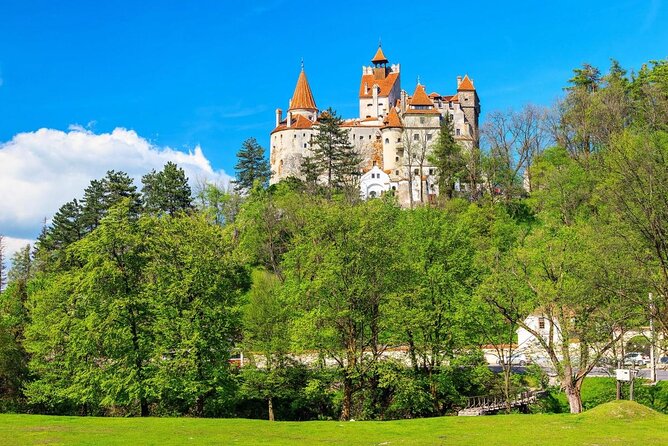
- Bran Castle opens the trip with Dracula lore, but the real appeal is the castle’s setting and royal history.
- Sighisoara gives you the strongest medieval town experience, with a historic center that has kept its old appearance.
- Biertan and Rupea show two very different kinds of defense, one built around a Saxon church and the other around a fortress on basalt rock.
- The private group size is limited to two to four people, making changes to the pace far easier than on a large coach tour.
- Astra Museum adds everyday rural life, with a huge open-air display spread through Dumbrava Sibiului.
- Admissions are not included, so budget separately for Bran Castle, Biertan, Rupea, Fagaras Fortress, and Astra Museum.
A compact way to see medieval Transylvania
This is a strong choice if you have two days based in Brasov and want more than a single castle outing. The route covers famous names, including Bran Castle and Sighisoara, but it also gives time to places that explain how Transylvanian communities actually lived and defended themselves.
The tour is private, with a maximum of four people. That matters here. You are not tied to the rhythm of a large bus, and you can use the guide for context rather than simply following a flag through a site. The advertised start is 8:30 am, with pickup and drop-off at your hotel.
The schedule is full. Several stops are planned for about one hour, while Sighisoara receives two hours. That is enough for a useful first look, but not enough for a slow museum day or long café stop at every location. Think of this as a well-packed regional sampler, not a leisurely stay in each town.
Past guide experiences connected with this tour include Tibi, who was noted for adding humor and arranging a highly tailored multi-day route, and Mr. Negrescu, who guided private outings around Brasov and Sibiu and was also described as an accomplished singer. You cannot assume which guide you will receive, but the private setup gives you a better chance of having the trip shaped around your interests.
More medieval town tours near Brașov:
- Brasov: Candlelight Tour of Medieval Architecture
★ 4.7 · 73 reviews - Guided visit in Spanish to the medieval center of Brasov (native Spanish guide).
★ 5.0 · 10 reviews - Medieval Brașov: Interactive City Game & Walking Tour
★ 5.0 · 9 reviews
Bran Castle, where history and Dracula compete
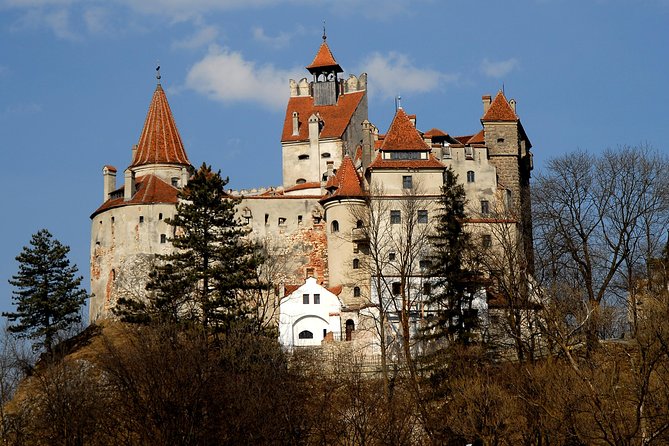
Bran Castle is the headline stop. Its towers and hilltop position fit the Dracula image so well that it is easy to forget the real story is more complicated.
Inside, you can walk through preserved rooms and chambers, see Gothic details, and hear about the castle’s connection to Bram Stoker’s fictional count. The site is also linked in popular memory to Vlad the Impaler, the 15th-century prince known for brutal campaigns against the Turks. The connection between Vlad and the castle is part of the fascination, though Dracula’s strongest pull comes from literature and modern tourism.
You should expect Bran to be the most crowded and commercial stop on the route, although the supplied information does not give crowd levels for your date. The visit is planned for about an hour, and the admission fee is extra. If you are mainly interested in the castle’s rooms, that is a reasonable visit. If you want a longer look at the grounds or more time for photos, ask your guide about the day’s timing.
I like starting here because it gives you the familiar Dracula image before the tour moves into quieter, more grounded places. Just do not judge all of Transylvania by Bran Castle. The churches, villages, and old towns later in the trip offer a fuller picture.
Biertan’s fortified church and the Saxon story
Biertan is one of the most meaningful stops because it shows how a religious building could also serve as a refuge. The Lutheran fortified church was built by the Transylvanian Saxon community, an ethnic German population that shaped many villages in this part of Romania.
The church began as a Catholic building and became Lutheran after the Reformation. It is part of the UNESCO-listed villages with fortified churches in Transylvania, a group of places valued for their distinctive defensive church architecture and village setting.
The visit is allotted one hour, with admission extra. That should give you time to see the church and its surrounding defenses with your guide. Biertan is less about a single dramatic view than about understanding the local pattern: village life, religious change, and the need to protect a community during uncertain times.
I would pay close attention to the setting rather than rushing through the interior. The church is the reason for the visit, but the relationship between the building and the settlement is what makes Biertan important.
Sighisoara, the trip’s best medieval town walk
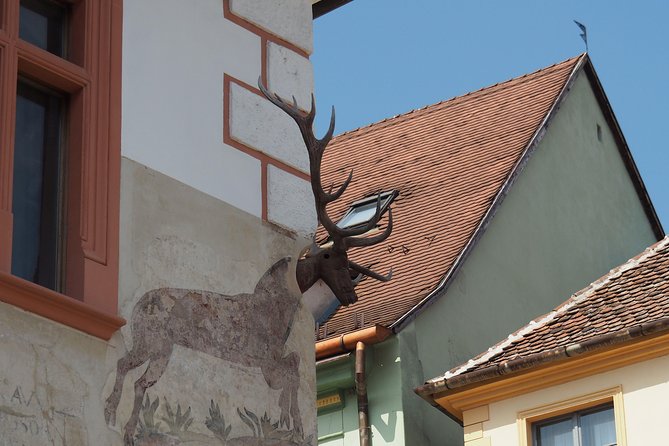
Sighisoara is likely to be the emotional center of the first day. The historic center retains a remarkably old appearance, with medieval streets and buildings that make the town feel more coherent than a single restored monument.
You have about two hours here. That is the longest stop on day one, and rightly so. Use the time to walk, look up at the old facades, and let the guide point out details you could miss on your own. The town is presented as the only city in Romania that looks much as it did in the 16th century, a bold claim, but the historic core does preserve a strong medieval character.
The admission policy is listed as extra, although the exact paid sites are not specified. Your guide can help you decide if a particular tower, church, or museum is worth adding to the day.
Two hours is useful but limited. You will get a good introduction, not a complete exploration of every lane and collection. If Sighisoara is your main reason for booking, tell the operator before the trip. The private format may allow some adjustment, though the full route still includes many stops.
More Transylvania day trips:
- Transylvania: Dracula’s Castle and Birthplace Tour
★ 4.8 · 123 reviews - Day trips and excursions in nature, cities in Transylvania, Brasov!
★ 5.0 · 84 reviews - Private Day Tour in Transylvania, Peles and Bran Castles from Brasov
★ 5.0 · 38 reviews - Rambling in Transylvania
★ 5.0 · 6 reviews
Rupea Fortress and the view from basalt rock
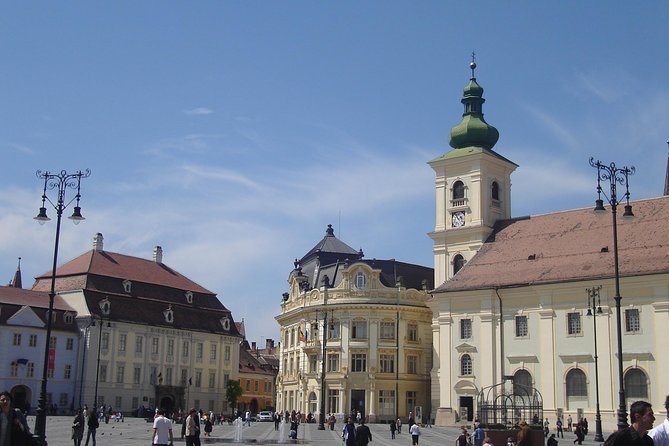
Rupea offers a change of scale and mood. Rather than a town center or church complex, you climb to a fortress built on a basalt outcrop. Its three rings date back to the 14th century, and the structure was designed to protect people and control movement across the area.
A well inside the fortress is said to be 60 meters deep, with drinkable water. That small detail helps you picture the practical side of siege defense. A fortress needed more than thick walls. It needed a water supply and enough space to support people during danger.
The planned visit lasts one hour, and admission is extra. You should be ready for walking and some uneven surfaces, since this is a hilltop fortress rather than a flat museum. The tour asks for a moderate level of physical fitness, so comfortable shoes are sensible.
Rupea is a good counterweight to Bran. Bran is tied to a powerful story that has been shaped by novels and film. Rupea is more direct: walls, rock, water, and a clear sense of military purpose.
Sibiu brings a polished old city into the picture
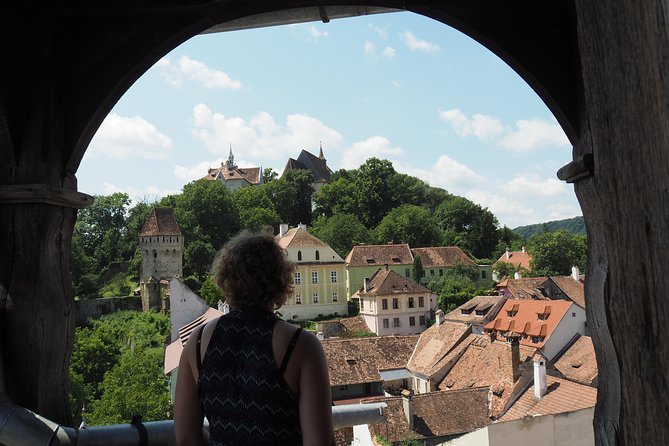
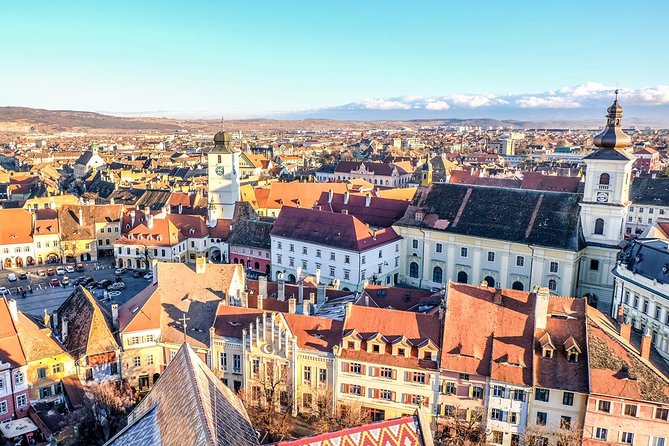
Day two begins in Sibiu, one of Transylvania’s major cultural centers. The stop is planned for one hour, and no admission is listed for the city visit itself.
Sibiu’s historical importance is easy to measure through its institutions. It had the first hospital in Romania, dating to 1292, the first pharmacy, dating to 1494, and the Brukenthal Museum, described as the country’s oldest museum, opened in 1817.
You will not cover all of that in an hour. Instead, expect an orientation to the city and its role as a cultural center. If you want to enter the Brukenthal Museum, you would need to ask about timing and admission, since the tour does not list a museum ticket as included.
Sibiu also gives the itinerary some variety. After fortresses and a small medieval town, you get a larger urban center with a different rhythm. I would use the stop to compare Sibiu with Sighisoara. Sighisoara feels more like a preserved medieval settlement, while Sibiu represents a living regional city with a long German and Romanian past.
Fagaras Fortress shows power on a larger scale
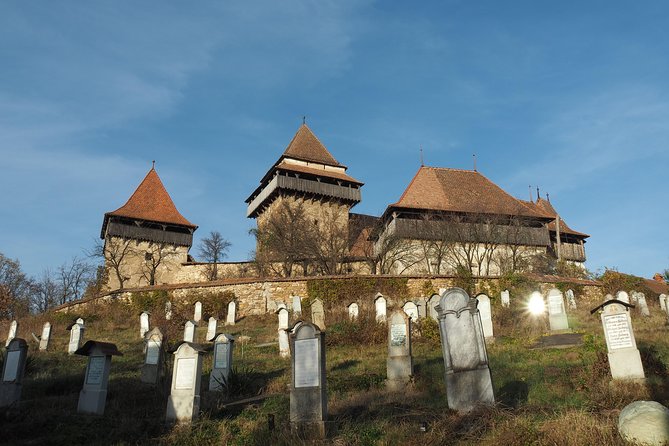
Fagaras Fortress is described as one of Eastern Europe’s largest and best-preserved feudal castle complexes. That makes it an important contrast with Bran, which is more famous but smaller and more closely tied to popular culture.
The fortress occupied a position of regional power and was expanded through the 17th century as its influence and wealth grew. Its size should help you understand that Transylvania’s defenses were not all isolated hilltop castles. Some were major centers that controlled territory and political power.
The stop lasts about one hour, and admission is extra. As with Rupea, the time gives you a focused visit rather than a full study of every room and exhibit. If military architecture interests you, this is a place where a private guide can make a real difference by explaining how the complex changed over time.
Fagaras is one of the stops that keeps the tour from becoming a Dracula-only circuit. You get a wider view of the region’s political past, not just its legends.
Astra Museum turns villages into an open-air lesson
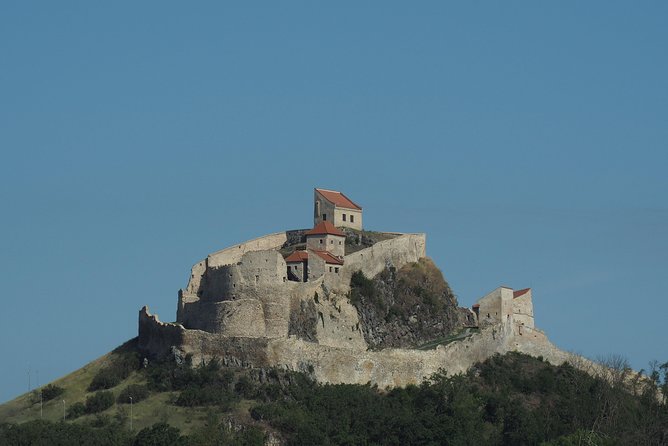
Astra Museum is a fitting final stop because it shifts attention from rulers and walls to ordinary work and daily life. It sits in the Dumbrava Sibiului nature reservation, about eight kilometers from Sibiu, on the road toward Rasinari and the Paltinis ski resort.
The museum covers 96 hectares, with a permanent exhibition spread across 40 hectares. It is described as the largest open-air ethnographic exhibition in Europe. The collection presents village buildings, crafts, and rural traditions from Romania in an outdoor setting.
One hour is enough to get a taste, but it is not enough to see the entire museum. This is the clearest place where the packed schedule may frustrate you. If you enjoy folk architecture and local traditions, you could easily want more time here than the itinerary allows.
Still, Astra adds depth. You see how people lived, built, and worked, which helps connect the grand fortresses to the communities that supported them. Bring water and wear shoes suited to walking outdoors. Bottled water is included, but drinks and meals beyond the included breakfast are not.
What the $347.91 price really covers
At $347.91 per person, the cost makes the most sense for two to four people who value privacy and convenience. You are paying for a private vehicle, a professional guide and driver, hotel pickup and drop-off, fuel, parking, breakfast, and overnight accommodation.
That bundled price can be useful because transport across several Transylvanian sites adds up quickly when arranged separately. You also avoid the work of linking rural churches, hilltop fortresses, Sighisoara, Sibiu, and Astra by public transport.
The important catch is that entrance fees are not included. Bran Castle, Biertan, Rupea Fortress, Fagaras Fortress, and Astra Museum all list admission as extra, so set aside additional money for the sites you choose to enter. Drinks, meals other than breakfast, and souvenir photos also cost extra.
The accommodation details are not specified, so ask what kind of lodging is provided before you book if the overnight stay matters to you. The same applies to the exact daily route, since the private format is promoted as flexible and the stops cover a large area.
Practical details that shape your two days
Pickup is complimentary, and the advertised start time is 8:30 am. You receive confirmation when booking, and the tour requires at least two people. The maximum is four, which is a major advantage for couples, families, or a small group of friends.
Bring your own mask, and hand sanitizer is provided. Vehicles are cleaned after each tour. The experience is private, so only your group participates.
You should have a moderate level of fitness. The tour includes fortresses, historic streets, and an expansive outdoor museum, so expect walking and some uneven ground. Public transportation is nearby, but pickup means you do not need to use it for the tour itself.
The cancellation terms are strict close to departure. Cancel at least six full days before the start for a full refund. Cancel two to six full days ahead for a 50 percent refund, while cancellations less than two full days before departure are not refunded. Changes inside those cutoffs are not accepted.
Who will get the most from this tour
I would choose this tour if you want a broad introduction to medieval Transylvania without renting a car or managing several hotel changes yourself. It suits couples and small groups that want a guide available for questions and the ability to adjust the pace.
It is also a good fit if you want more than Bran Castle. Biertan, Rupea, Fagaras, and Astra provide the cultural and historical range that a single castle trip lacks. The itinerary works especially well for someone visiting Romania for a short time and wanting to connect Brasov with Sibiu and the Saxon villages.
I would hesitate if you prefer slow travel. Sighisoara gets two hours, but most other stops receive one. You will see many places, yet you will not have unlimited time for museums, long meals, shopping, or unplanned walks.
Should you book the Medieval Transylvania Private Tour?
Book it if your priority is variety, private transport, and a guide-led introduction to the region. The combination of Bran Castle, Sighisoara, fortified churches, Rupea, Fagaras, Sibiu, and Astra is impressive for two days, and the small group limit gives the route a personal feel.
Before paying, confirm the overnight accommodation, ask which entrance fees you should budget for, and explain which stops matter most to you. If you want Dracula folklore, give Bran extra attention. If you care more about Saxon culture and village life, ask for more context at Biertan and Astra.
For a first look at Transylvania from Brasov, this is a sensible and full itinerary. For a relaxed retreat, it moves too fast. Your decision comes down to one simple question: do you want to cover a lot of ground with private guidance, or spend longer in fewer places?
FAQ
Where does the tour start?
The tour starts with pickup from your hotel or an agreed pickup point in Brasov. The advertised start time is 8:30 am.
How many people can join the private tour?
A minimum of two people is required per booking, and the maximum group size is four people. Only your group participates.
Is accommodation included?
Yes. One night of overnight accommodation and breakfast are included, but the exact accommodation details are not specified.
Are entrance fees included?
No. Entrance fees for sites such as Bran Castle, Biertan Fortified Church, Rupea Fortress, Fagaras Fortress, and Astra Museum are not included.
What should I bring?
Bring your own mask and wear comfortable shoes suitable for moderate walking. Bottled water and hand sanitizer are provided.
Can I cancel for a full refund?
Yes, if you cancel at least six full days before the experience start time. Cancellation two to six full days ahead receives a 50 percent refund, while cancellation less than two full days before departure is not refunded.
Recently added around Brașov
- Brasov to Bucharest – Private Guided Transfer – Car and Driver★ 5.0 · 3 reviews
- Perfect bike tour around Brasov★ 5.0 · 3 reviews
- Hike in the Wild Private Photo Tour★ 5.0 · 3 reviews
- Brasov (:) Tandem Paragliding Experience★ 5.0 · 3 reviews
- Brașov Top Craft Beer & Secret Bars Tour with Local Guide★ 5.0 · 3 reviews
- Mountain Bike Day Tour around Brasov★ 5.0 · 3 reviews
- Brasov: Bran Castle, Bear Sanctuary, Rasnov (Peles Optional)★ 3.1 · 3 reviews
- Expedition in Fagaras Mountains from Brasov (Private Tour!)★ 5.0 · 3 reviews
Medieval Town Tours, compared.
Peles Castle, Dracula’s Castle and Medieval Town of Brasov in one day
Read our review →
2-Day Medieval Transylvania with Brasov,Sibiu and Sighisoara Tour from Bucharest
Read our review →
Visit Bulgaria – Veliko Tarnovo Medieval Fortress – Private tour from Bucharest
Read our review →
Private Tour: Transylvanian Castles and Brasov’s Medieval Old Town
Read our review →
Day trip to Dracula’s Castle, Peles Castle and Medieval Brasov
Read our review →Browse the lists this tour appears in